
When one casts one’s mind to the Norwegian postal service of the late 1700s, as one is from time to time inevitably wont to do, thoughts meander off to visions of hardy souls with teams of reindeer hauling sled loads of mail over the snow laden Bæskades mountains, through all manner of storm and adversity, creating a vital link between central Finland and the far north.
Summoning all of this imagery and hardy spirit your correspondent bicycles southwards to the town of Alta and then onto ‘The Old Postal Road’ a famed stretch of gravel road and another lovely arctic pass or two. It is a little early in the season for high altitude riding but with the bit firmly champed and imbued with a feeling of confidence that all will be fine, I set off for some mountain gravel action. It was something less than fine. [Read to end to see how Buff3y Destroyed by Mountain!]

When you leave something outside the sports/camping shop up in Honningsvåg, the next day it is secured and sitting there awaiting your return. Very honest place this.
A challenging 7 km tunnel joins the island with the southern mainland. Less than pleasant.

The Sennalandet plateau south of Honningsvåg is a “high-altitude” (385 metre) pass which climbs gently for 30 km to a magnificent 10 km of undulating arctic plain, which was ideal for bike-tourer camping. Only a few deserted cabins for company. The road then carries on down into the town of Alta. [205 km south of Honningsvåg].

A pit stop in Alta and the opportunity to check out the museum and the 2,000-7,000 year old rock carvings, many of which depict folk hurling spears into unfortunate beasties (refer reindeer soup below).
Off the main road to Gargia and the top half of the Old Postal Road. 30km of pretty slow going with some snow still across the road. Another gob-smacking camp site is the reward at the top though. (Sorry about the camera work here. He’s pretty hopeless)

Even for the hardiest traveller there is respite at a little roadside cafe where the highway intersects with the Old Postal Road. Some reindeer soup and more delightful smør, then back onto the gravel. for part two

The top/northern half of the Postal had a few snow drifts which were slow going in places but mostly manageable. On the bottom half, however, the snow, sludge and mud becomes a bit too frequent for this touring cyclist necessitating far too many trips off into the scrub and swamp just to get around or through.
A wise bike tourer would have intensively researched the local conditions and taken as much local advice as possible regarding the conditions on the road, and probably waited a week or so to do the Postal Road while the snow melts and the road dries a bit. Here at Buff3ysbicyclingblog, however, we just have to work with what we’ve got.
More pushing than biking through much of this as where the snow gives up, the sludge and mud takes over. Slow going.
Road cut at one place, so no four-wheel access until the land around the road dries out. Been across larger rivers with a bike but this cut the road entirely.

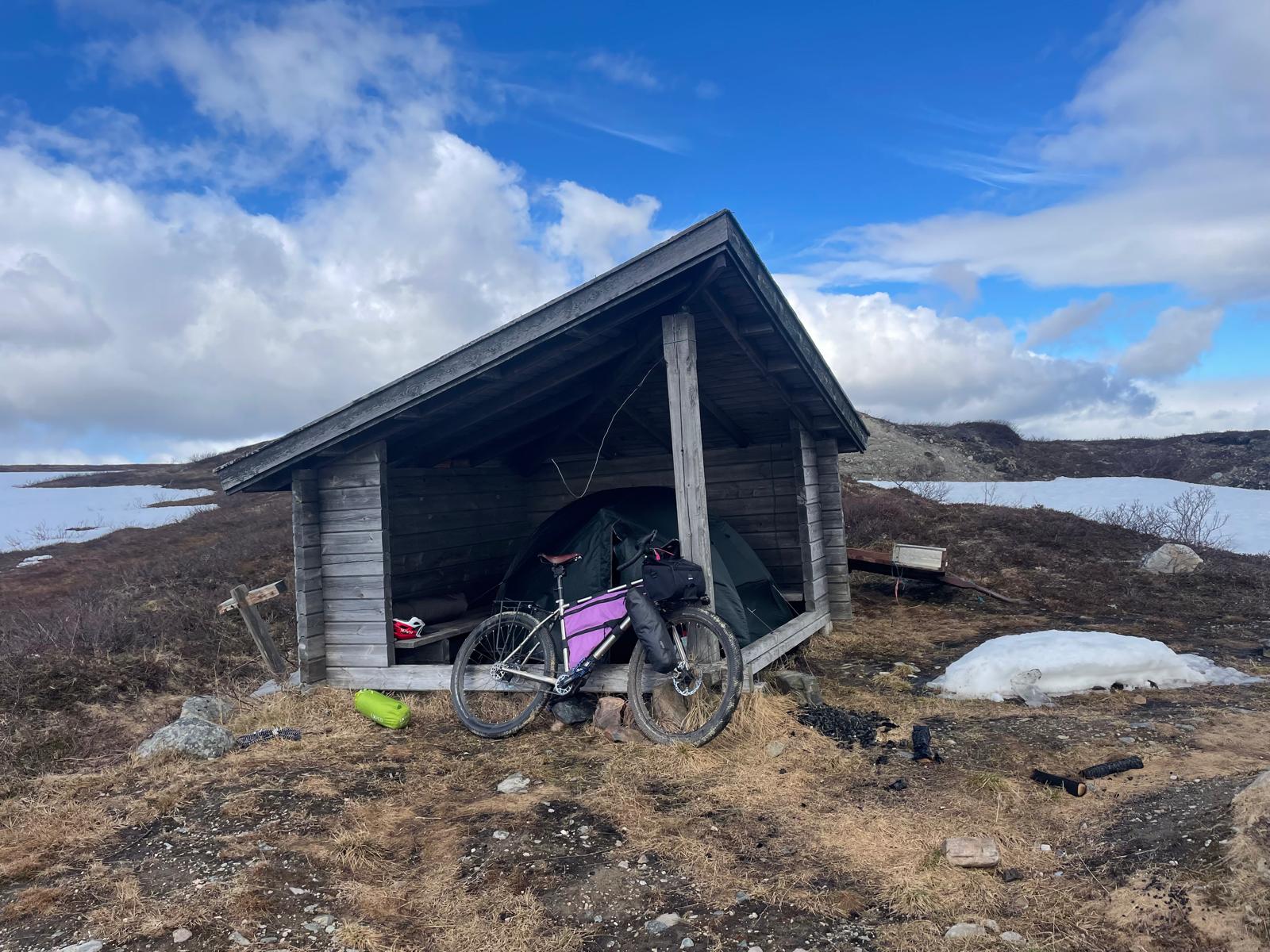
Up ever so gradually to the top of the Bæskades Pass. Here sought out shelter from the strong wind at the top of the pass by pitching the tent in the wooden shelter.

Finally through the sludge and back onto the blessed and meticulously maintained Norwegian tarmac and the little town of Kautokieno with its toasty warm camping cabins and piping hot showers!
The trick with a rest day off the bike this early in a trip is to move your legs as little as humanly possible, whilst still enjoying the challenge of perching atop some hobbit-sized furniture.
It is 47 km from here to the Finland border and then a ride just across the Swedish border and down to my first glimpse of the Baltic Sea (and the first Sea-to-Sea wheel dip for this trip).


![Poland [ July 2026]](https://buff3ysbicyclingblog.info/wp-content/uploads/2026/07/DSCF0833.jpg)
![Buff3y Blasts Through The Baltics: Estonia, Latvia & Lithuania [July 2026]](https://buff3ysbicyclingblog.info/wp-content/uploads/2026/07/Strawberries.jpeg)
Leave a Reply